Nature Corner: Autumn’s Other Colorful Display – Part 1
by Wendy Oellers-Fulmer, 10/13/2026
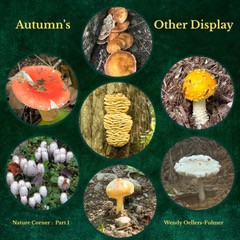
Along with the vibrant leaves overhead, autumn offers another colorful display…one that invites us to look down. Mushrooms appear in a dazzling variety of shapes, colors, and textures, adding their own quiet wonder to the season.
In the woods or even on your front lawn, you may discover mushrooms nestled among fallen leaves, clustered around stumps, or growing like little shelves along a log.
A mushroom is the fruiting body…the reproductive structure of a fungus. Much of that fungus remains hidden in soil or wood as a network of fine threads called mycelium.
Like spring wildflowers, mushrooms need suitable conditions to flourish. Autumn’s rain and favorable cooler temperatures encourage many species to emerge, sometimes seemingly overnight.
Decomposer fungi feed on fallen leaves, old roots, and decaying wood, helping recycle nutrients through the ecosystem. Other fungi partner with tree roots, helping trees absorb water and nutrients in exchange for sugars. Mushrooms produce spores that can travel on the wind and begin new fungal growth in suitable places.
Different species appear in different seasons, depending on weather and habitat. While autumn draws our eyes toward the glowing treetops, another world of wonder is quietly unfolding beneath our feet.
Autumn Mushroom Seasons
Approximate timing varies by species, location, and weather.
| Seasonal period | Mushrooms you may encounter |
| Late summer into fall | Porcini, chicken of the woods, black trumpets |
| Fall | Honey mushrooms, maitake (hen of the woods), lion’s mane, hedgehog mushrooms |
| Late fall into colder weather | Wood blewit, late oyster, velvet shank, yellowfoot |
Next week: We’ll explore edible and poisonous mushrooms, the importance of careful identification, and how fungi provide food for wildlife.
To discover more:
Nature Corner: The Artistry of Autumn
by Wendy Oellers-Fulmer, 10/6/2026
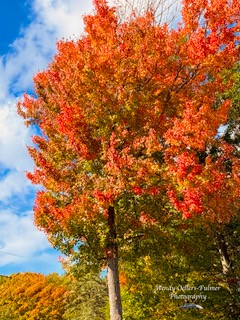
This year, to the delight of residents and visitors alike, autumn’s vibrant oranges, reds, and yellows seem to glow across our New England landscapes.
Why is the display sometimes so glorious, while in other years the anticipated color feast disappoints?
Like an artist preparing a palette for a masterpiece, nature relies on a favorable blend of sunlight, moisture, and temperature to create autumn’s most brilliant displays.
As summer winds down and daylight hours shorten, chlorophyll, the pigment that gives leaves their green color, begins to break down. As the green fades, yellow and orange pigments (carotenoids and xanthophylls) that have been present all summer emerge. Many reds and purples come from anthocyanins, pigments produced in autumn as sugars accumulate in the leaves.
Several conditions favor this seasonal artistry:
- Adequate rainfall during the growing season to keep trees healthy.
- Warm, sunny days in early fall, allowing leaves to continue producing sugars.
- Cool, crisp nights that help those sugars remain in the leaves.
- Nighttime temperatures above freezing, favoring brilliant red and purple pigments.
- An absence of prolonged late-summer drought, which can stress trees and cause premature leaf drop.
- No early hard freeze, which can damage leaves and shorten the display.
Whatever the blend of conditions behind this year’s brilliance, autumn invites us to pause, look closely, and savor nature’s fleeting masterpiece./education/explainers/can-crickets-tell-temperature-answer-is-in-their-chirp
Nature Corner: A Tale of Two Leaves
by Wendy Oellers-Fulmer, 9/29/2026
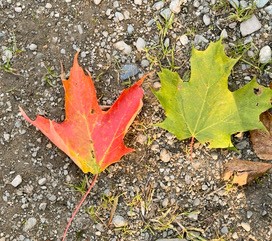
On a recent woods walk, we came upon two maple leaves on the ground, inches apart. One was brilliant scarlet, with deeply divided lobes. The second was still green and much broader. My first thought was that they came from different species. But looking up, we discovered they were growing on the same tree.
Even more curious, some branches were already displaying vibrant red leaves while another part of the tree was still green.
A little investigating revealed that red maple (Acer rubrum) leaves can vary considerably in shape. Their lobes may be broad or more deeply divided, so leaves from the same species can look surprisingly different.
But why was one part of the tree already dressed for autumn while the other was still wearing green?
As autumn days shorten, green chlorophyll begins to break down. Red pigments called anthocyanins develop in the leaves, and sunlight can encourage their production. As a result, leaves receiving more sun may turn brilliant red while those on the shadier side of the same tree remain green longer. Temperature, moisture and genetics can also influence the timing and intensity of fall color.
And why the name “red maple”? Red weaves through much of this maple’s life cycle; from its spring flowers and winged samaras to its leaf stalks and brilliant autumn foliage.
All of which we discovered because two leaves lying side by side didn’t look as though they belonged together.
Nature Corner: When a Fallen Giant Tells Its Story
by Wendy Oellers-Fulmer, 9/22/2026
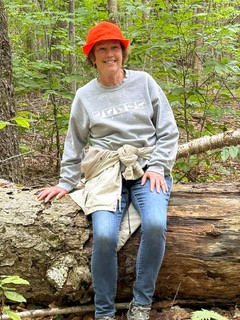
I had always thought birch trees were rather short-lived. Then I met this one.
Our state tree, the white birch (also known as paper or canoe birch), is relatively short-lived, generally living about 60–80 years. Gray birches, also found in New Hampshire, are shorter-lived still.
But during a recent walk in the woods, I encountered a fallen mammoth of a tree, with a trunk more than 2½ feet in diameter. Although its bark had some telltale characteristics of a birch, I didn’t think birches grew this large.
After photographing it and doing some research, I discovered, to my amazement, that it was a yellow birch (Betula alleghaniensis).
Yellow birches are among the largest deciduous trees in New Hampshire, capable of reaching 100 feet in height and three feet in diameter. But what surprised me most was their longevity. In old-growth forests, they can live 150–300 years. The oldest documented yellow birch was at least 387 years old!
How old was the giant lying across my path? Without counting its rings, I can’t know. But at more than 2½ feet across, it had certainly lived quite a story.
And its story isn’t over.
Once fallen, the tree continues to give back to the forest. As it slowly decays, it holds moisture, nourishes fungi and invertebrates, returns nutrients to the soil and becomes a nurse log; a place where new life can begin. Fittingly, yellow birch seedlings themselves often germinate on old stumps and nurse logs.
Even in its falling, this old giant is helping to grow the forest that will come after it.
To discover how yellow birches provide food and shelter for wildlife, from moose and snowshoe hares to hummingbirds and hawks, visit UNH Extension: